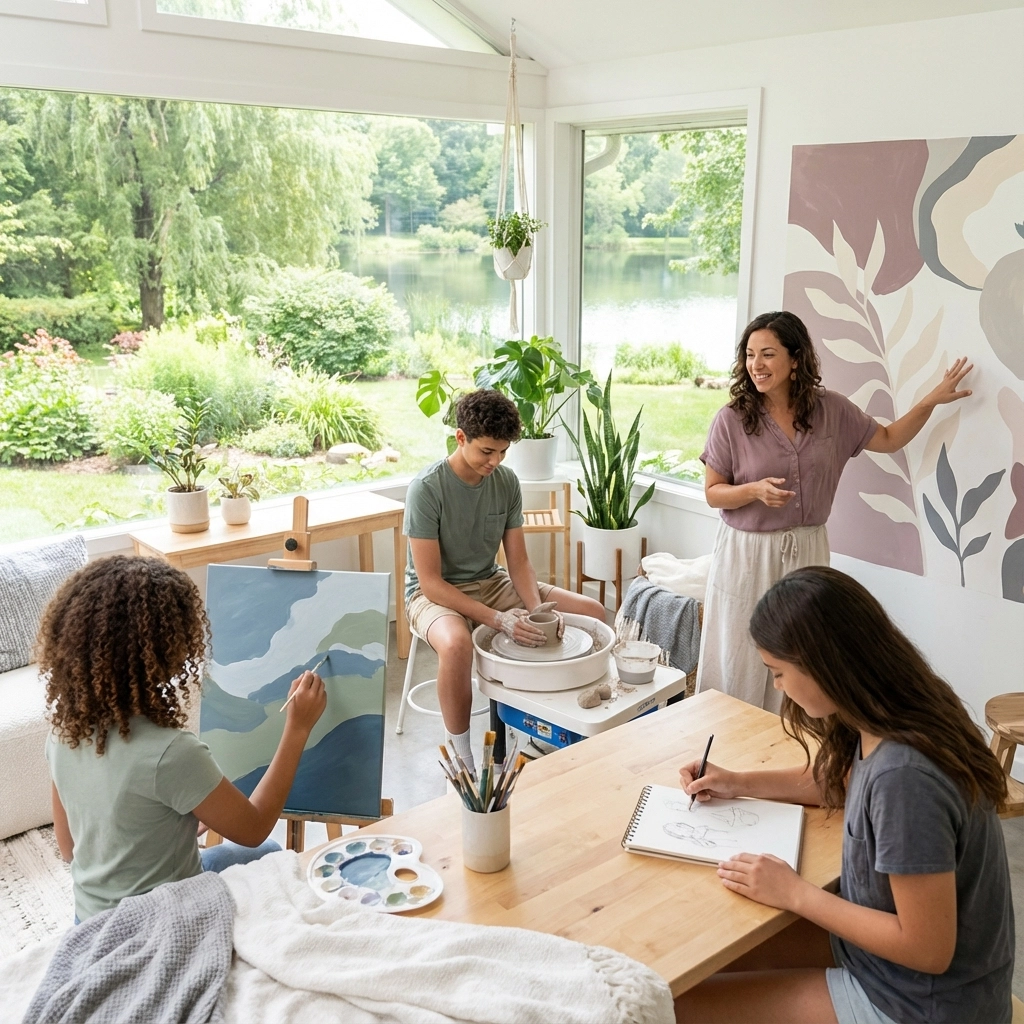
If you’re struggling to get your teenager to open up, you’re not alone. Many parents face one-word answers and eye rolls when trying to connect. The good news is that mental health counseling through creative arts and art therapy teen communication approaches can create a breakthrough when traditional conversation falls short.
At Thrive Wellness Clinic, we’ve seen countless families transform their communication patterns through innovative approaches that honor how teens naturally express themselves. In our art therapy teen communication work, the most profound conversations often happen without words at all.
Why Traditional Communication Falls Short With Teens
Teenagers live in a complex emotional landscape that often feels too intense or overwhelming to put into words. Their brains are still developing, particularly the areas responsible for emotional regulation and verbal expression. When you ask “How was your day?” and get a grunt in response, it’s not necessarily defiance: it might be that your teen genuinely lacks the insight and awareness to verbalize their internal experiences.
Many teens view traditional “talking” as intimidating or judge it as only necessary for serious mental health issues. They may worry about saying the wrong thing, being misunderstood, or facing consequences for their honesty. This creates a communication barrier that leaves both teens and parents feeling frustrated and disconnected.
The adolescent years bring unique challenges: academic pressure, social dynamics, identity formation, and physical changes. These experiences create feelings that are often too complex to capture through words alone, especially when teens haven’t yet developed the emotional vocabulary to describe what they’re experiencing.
The Power of Art Therapy Teen Communication
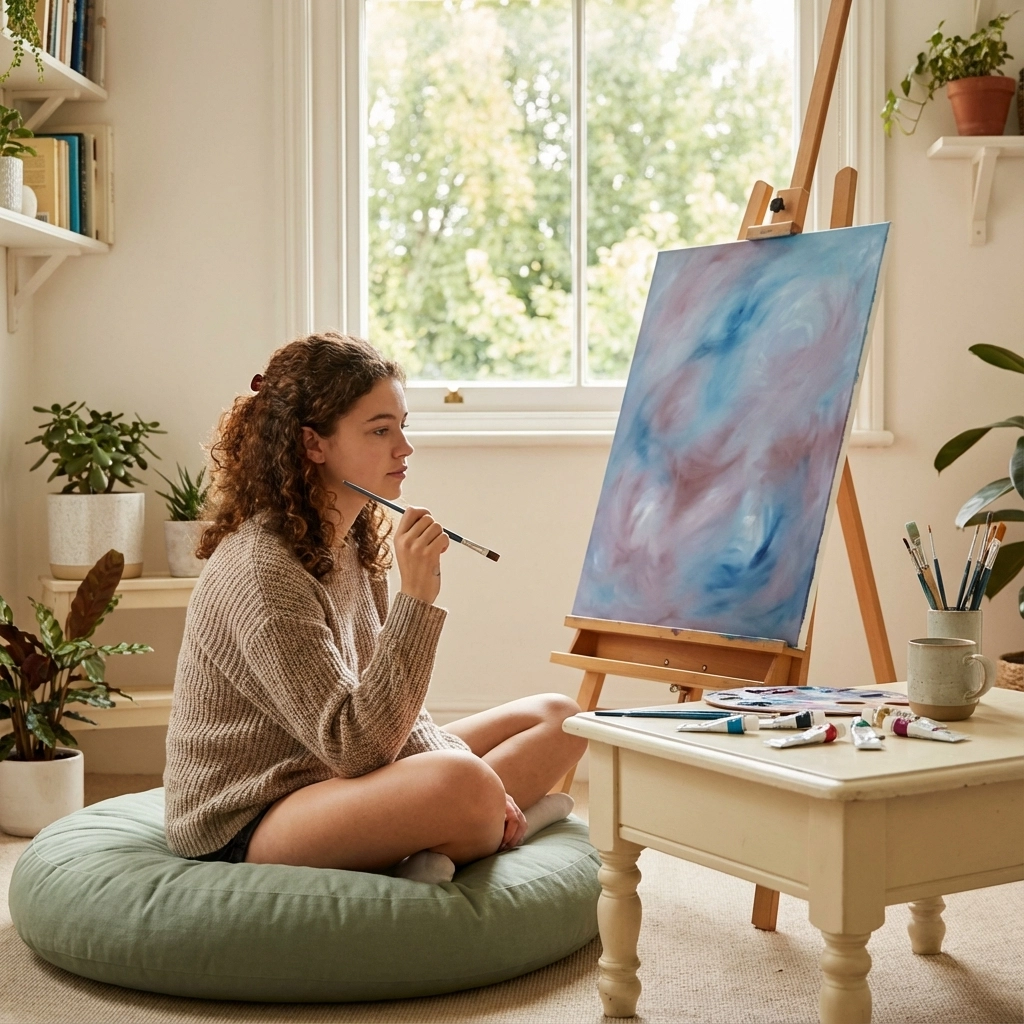
Creative arts offer teens a non-verbal outlet for expressing emotions that feel impossible to articulate. When teens engage in artistic activities: whether drawing, painting, sculpting, or other creative mediums: they access a different part of their brain that bypasses the verbal barriers that often shut down traditional communication.
Art becomes a bridge between internal experiences and external expression. Instead of struggling to find the right words, teens can pour their feelings into colors, shapes, lines, and textures. This creative process often reveals insights that surprise both the teen and their family members.
The beauty of creative expression lies in its non-threatening nature. There’s no “right” or “wrong” way to create art, which removes the performance pressure that many teens feel in verbal communication. This freedom allows for authentic expression and can lead to breakthrough moments in family relationships.
How Art Therapy Improves Teen Communication
Art therapy takes creative expression a step further by providing professional guidance and therapeutic structure. Unlike simply making art at home, art therapy with a trained counselor creates a safe space where teens can explore their emotions and develop communication skills gradually. For an overview of the field, see the American Art Therapy Association.
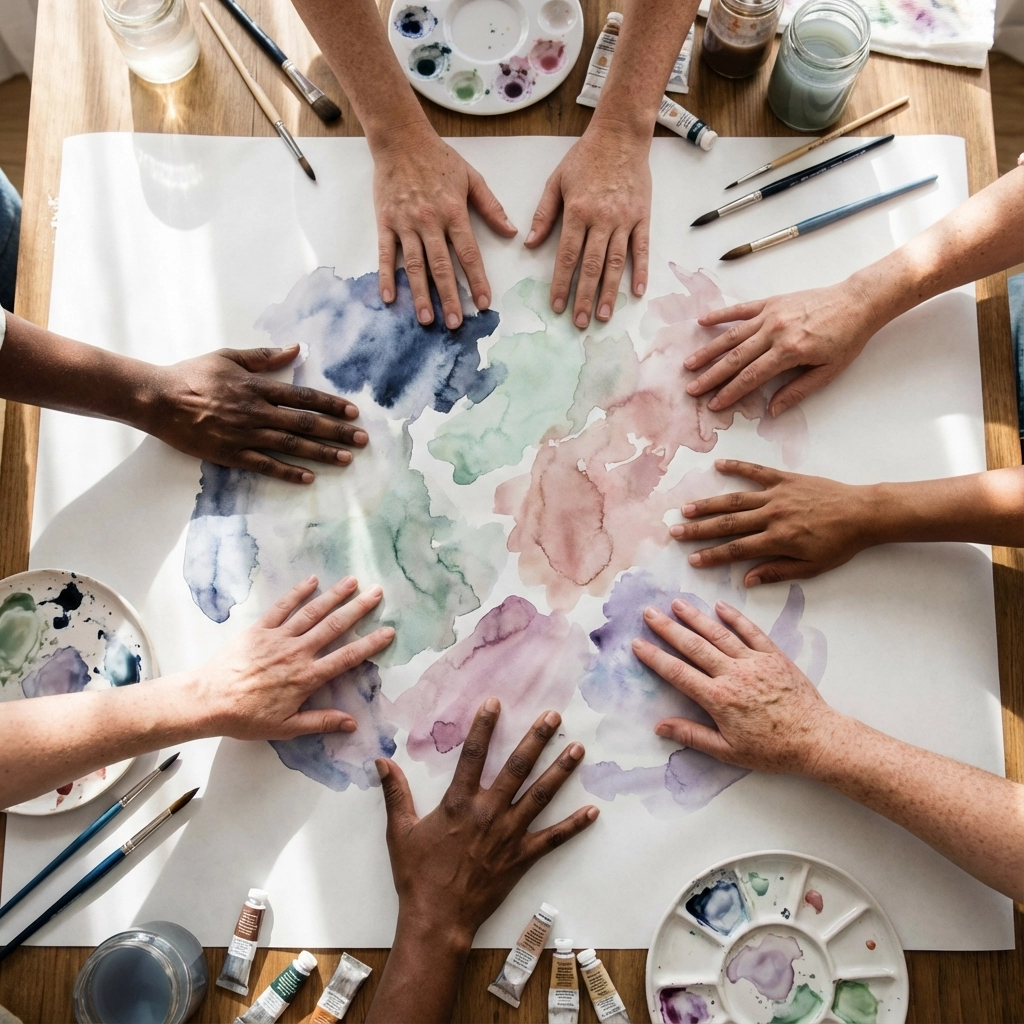
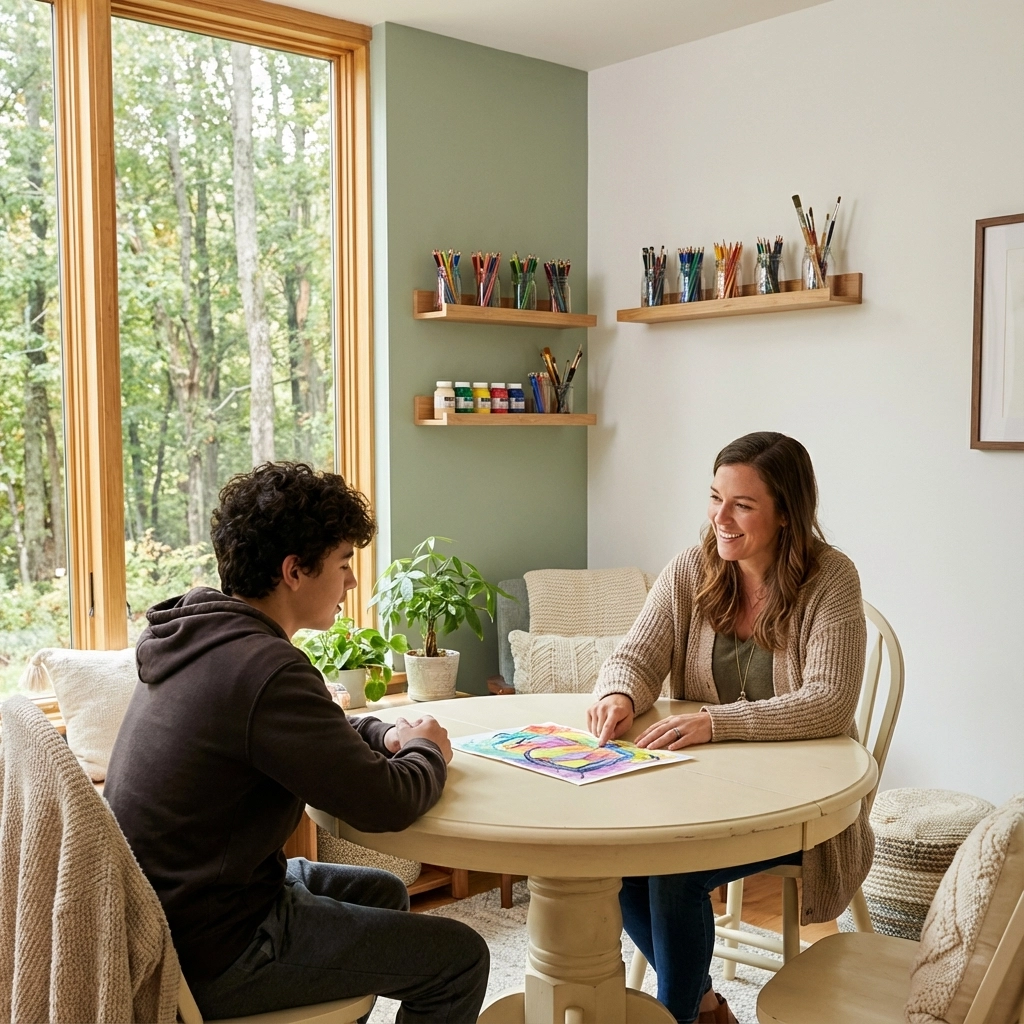
The artwork becomes a focal point for discussion, giving families something concrete to talk about rather than confronting emotions head-on. This indirect approach makes sensitive topics significantly easier to address. When a teen creates a piece that represents their anxiety, for example, both the teen and parent can discuss the artwork rather than the anxiety itself, reducing defensiveness and opening dialogue.
Art therapy helps externalize internal feelings. By putting emotions into a painting, drawing, or sculpture, teens create a tangible starting point for conversation. The artwork serves as a translator between the teen’s inner world and their family’s understanding, helping everyone comprehend feelings that might otherwise remain hidden.
Meet Amanda Hunsberger: Your Art Therapy Specialist
At Thrive Wellness Clinic, Amanda Hunsberger specializes in helping teens and families break through communication barriers using creative arts and art therapy. Amanda understands that traditional talk therapy isn’t always the best fit for every teenager, and she brings a unique approach that honors how teens naturally express themselves.
Amanda’s approach combines professional art therapy training with a deep understanding of adolescent development. She creates a therapeutic environment where teens feel comfortable exploring their emotions through various artistic mediums. Whether working with teens struggling with anxiety, depression, family conflicts, or identity issues, Amanda uses art as a pathway to healing and improved communication.
Working with Amanda means your teen will have access to a safe space where they can express themselves authentically without fear of judgment. She helps families understand the messages contained within their teen’s artwork and facilitates conversations that might never happen otherwise. Her gentle, supportive approach has helped countless families rediscover connection and understanding.
Benefits of Art Therapy Teen Communication
Art therapy provides numerous benefits that directly impact teen communication and overall mental health counseling outcomes. The creative process encourages teens to explore and articulate their thoughts and feelings through an alternative language that feels more natural and less intimidating than verbal expression.
Through regular art therapy sessions, teens develop stronger self-reflection skills and self-understanding. This enhanced self-awareness naturally translates into improved ability to communicate with family members. As teens become more comfortable expressing themselves through art, they often become more willing to share verbally as well.
The non-judgmental nature of art therapy helps reduce the stigma teens often feel about seeking help. Instead of feeling like they’re “broken” or need fixing, teens approach art therapy as a creative outlet that happens to provide therapeutic benefits. This reframing makes the counseling process more appealing and effective for adolescents.
Getting Started: What Parents Can Expect
If you’re considering art therapy for your teen, understanding the process can help set realistic expectations. Initial sessions typically involve assessment and relationship-building, allowing your teen to become comfortable with the therapeutic environment and available materials.
Amanda works collaboratively with families, providing guidance on how to support your teen’s creative expression at home while respecting the therapeutic boundaries of the counseling relationship. She may suggest ways for families to incorporate creative activities into their daily routines or recommend art supplies that encourage continued expression outside of sessions.
Progress in art therapy often looks different from traditional counseling for anxiety or counseling for depression. Instead of focusing solely on verbal breakthroughs, families may notice their teen becoming more expressive overall, showing increased emotional awareness, or demonstrating improved mood and behavior. These changes often precede improved verbal communication.
Integrating Art Therapy with Holistic Mental Health Care
At Thrive Wellness Clinic, we understand that effective teen mental health care requires a holistic approach. Art therapy can be combined with family therapy sessions that include parents and siblings, creating opportunities for enhanced family communication and understanding.
Some families benefit from group therapy near me options where teens can share their creative expressions with peers facing similar challenges. This peer connection often reduces isolation and provides additional motivation for continued growth and communication improvement.
Our comprehensive approach means Amanda can collaborate with other specialists on our team when needed, ensuring your teen receives well-rounded care that addresses all aspects of their well-being. This might include coordination with therapists specializing in anxiety, depression, or family dynamics.
Building Long-Term Communication Skills
The skills teens develop through art therapy teen communication extend far beyond the counseling sessions. Creative expression teaches teens that their feelings are valid and that there are multiple ways to communicate and connect with others. These lessons serve them throughout adolescence and into adulthood.
Many families discover that art therapy opens doors to ongoing creative activities at home. Parents might find that keeping art supplies available creates natural opportunities for connection and conversation. The key is maintaining the non-pressured, accepting atmosphere that makes art therapy effective.
In Conclusion
Getting your teen to communicate doesn’t have to be an uphill battle. Creative arts and art therapy teen communication provide powerful alternatives to traditional conversation, honoring how teens naturally express themselves while building stronger family connections. At Thrive Wellness Clinic, Amanda Hunsberger specializes in helping families break through communication barriers using these innovative approaches.
If you’re ready to explore how art therapy teen communication might help your family, consider reaching out to discuss your teen’s specific needs. Remember that seeking support shows strength, not weakness, and that there are multiple pathways to healing and connection. Your teen’s voice matters, and sometimes it’s expressed most clearly through colors, shapes, and creative expression rather than words.