

Title: Encourage Kids to Draw or Write
Slug: encourage-kids-to-draw-or-write
Meta Description: Discover how encouraging kids to draw or write builds emotional awareness and positivity. Expert parenting tips for child development and family wellness.
Tags: child development, emotional awareness, parenting tips, journaling, gratitude, mental health, family wellness
When you encourage kids to draw or write about their daily experiences, dreams, and gratitude, you're giving them powerful tools for emotional growth and self-expression. As parents and caregivers, you might wonder how simple activities like doodling or writing a few sentences can make such a meaningful difference in your child's development. The truth is, these creative outlets serve as windows into your child's inner world while building essential emotional awareness and fostering lasting positivity.
You're not alone if you've noticed your child struggling to express their feelings verbally. In fact, many children find it easier to communicate through art and writing, making these activities invaluable bridges to understanding their emotional landscape. As a result, when children put pencil to paper, whether drawing colorful pictures or writing simple stories, they're processing their experiences in ways that promote both mental wellness and cognitive development.
Why Drawing and Writing Build Emotional Awareness
In particular, creative expression through drawing and writing helps children develop emotional intelligence in ways that direct conversation sometimes cannot. Additionally, when you provide your child with opportunities to illustrate their day or write about their feelings, you're encouraging them to slow down and reflect on their experiences.
Drawing allows children to externalize complex emotions that they may not yet have words for. For example, a child who draws themselves as a small figure surrounded by large, dark shapes might be processing feelings of overwhelm or anxiety. Similarly, when children write about their dreams or aspirations, they begin to understand their own desires and motivations more clearly.
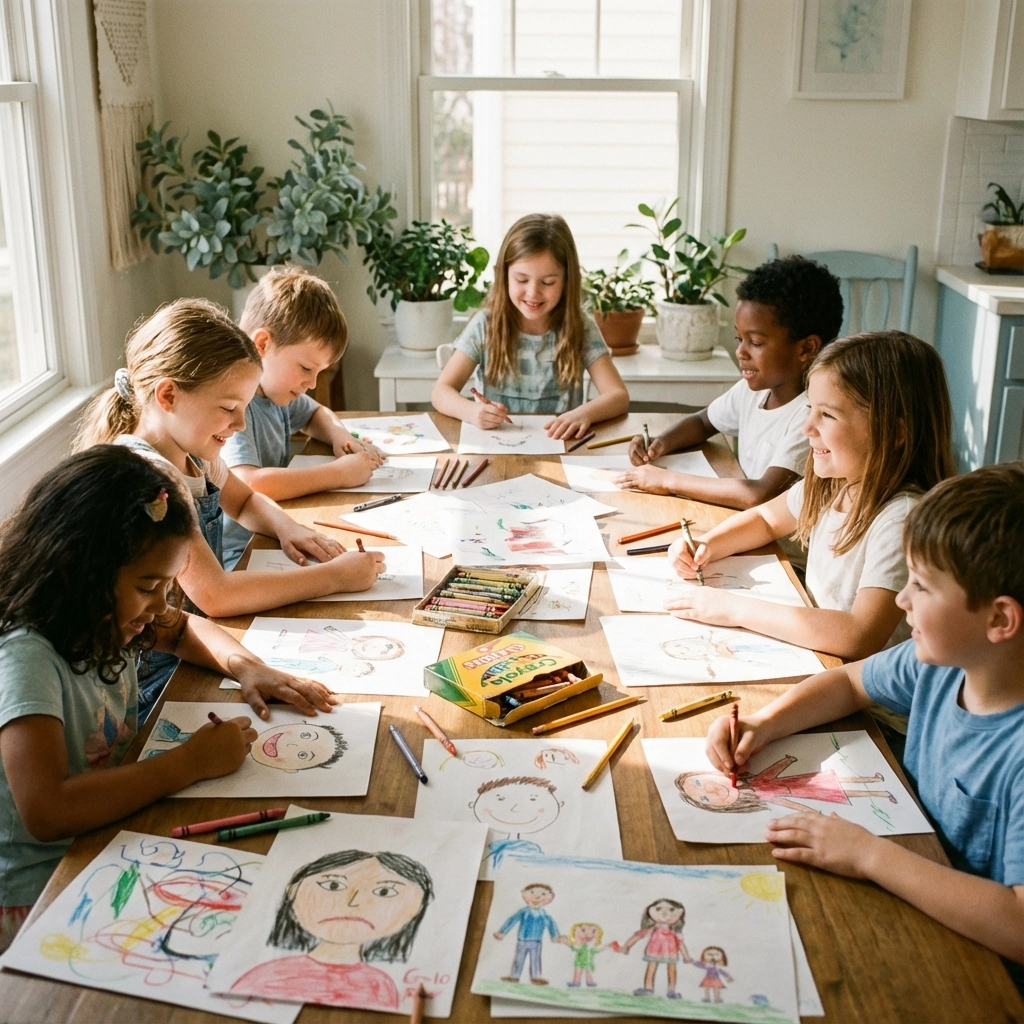
The act of creating art or writing engages different parts of the brain than verbal communication. As a result, this multi-sensory approach to processing emotions helps children build neural pathways that support emotional regulation throughout their lives. Over time, you'll often find that children who regularly engage in these activities become more aware of their emotional states and better equipped to manage difficult feelings.
In fact, research shows that creative expression can reduce stress hormones in children while increasing feel-good neurotransmitters like dopamine and serotonin. For instance, when your child draws a picture of a happy memory or writes about something they're grateful for, their brain literally rewires itself to focus more on positive experiences.
Getting Started: Creating the Right Environment
You don't need expensive art supplies or perfect penmanship to begin encouraging kids to draw or write. Instead, the key is creating a welcoming, pressure-free environment where your child feels safe to express themselves authentically.
Set up a designated creative space in your home where art supplies are easily accessible. For example, this might be a small table with crayons, colored pencils, markers, and various types of paper. Additionally, keep a few journals or notebooks specifically for writing activities. Ultimately, the goal is making creative expression as convenient as reaching for a snack.
Essential supplies for success:
- Age-appropriate writing and drawing tools
- Different types of paper (lined, blank, colored)
- A comfortable, well-lit workspace
- Storage for finished creations
- A positive, encouraging atmosphere
Above all, remember that the process matters more than the product. When you focus on your child's effort and creativity rather than technical skill, you create psychological safety that encourages continued exploration and emotional expression.

Age-Appropriate Activities That Build Emotional Awareness
Different developmental stages call for different approaches to encouraging creative expression. Therefore, tailoring activities to your child's age and abilities ensures they feel capable and engaged rather than frustrated or overwhelmed.
For younger children (ages 3-6):
- Drawing family pictures and talking about each person's expression
- Creating "feeling faces" with different emotions
- Illustrated gratitude lists with simple drawings
- Story pictures where they draw something that happened during their day
- Color emotion wheels where different colors represent different feelings
For school-age children (ages 7-10):
- Daily journal entries about their experiences and feelings
- Comic strips featuring themselves as the main character
- "Dream journals" where they write or draw about their aspirations
- Gratitude letters to people who matter to them
- Emotion mapping exercises where they track their feelings throughout the day
For older children (ages 11+):
- Reflective writing about challenges and how they overcame them
- Art therapy-inspired activities like emotion collages
- Goal-setting journals with both written and visual elements
- Mindfulness drawings that help them focus on the present moment
- Poetry or song writing about their experiences
In other words, the beauty of these activities lies in their flexibility. Ultimately, you can adapt any exercise to meet your child where they are developmentally and emotionally.
Building Positivity Through Gratitude and Dreams
One of the most powerful ways to encourage kids to draw or write is by focusing on gratitude and future aspirations. As a result, these positive-focused activities rewire young brains to notice and appreciate good things while building hope and optimism for the future.
For example, gratitude practices can be as simple as having your child draw three things they're thankful for each day or writing a weekly letter to someone who made them smile. As a result, when children regularly acknowledge positive aspects of their lives, they develop a more optimistic worldview and greater resilience in facing challenges.
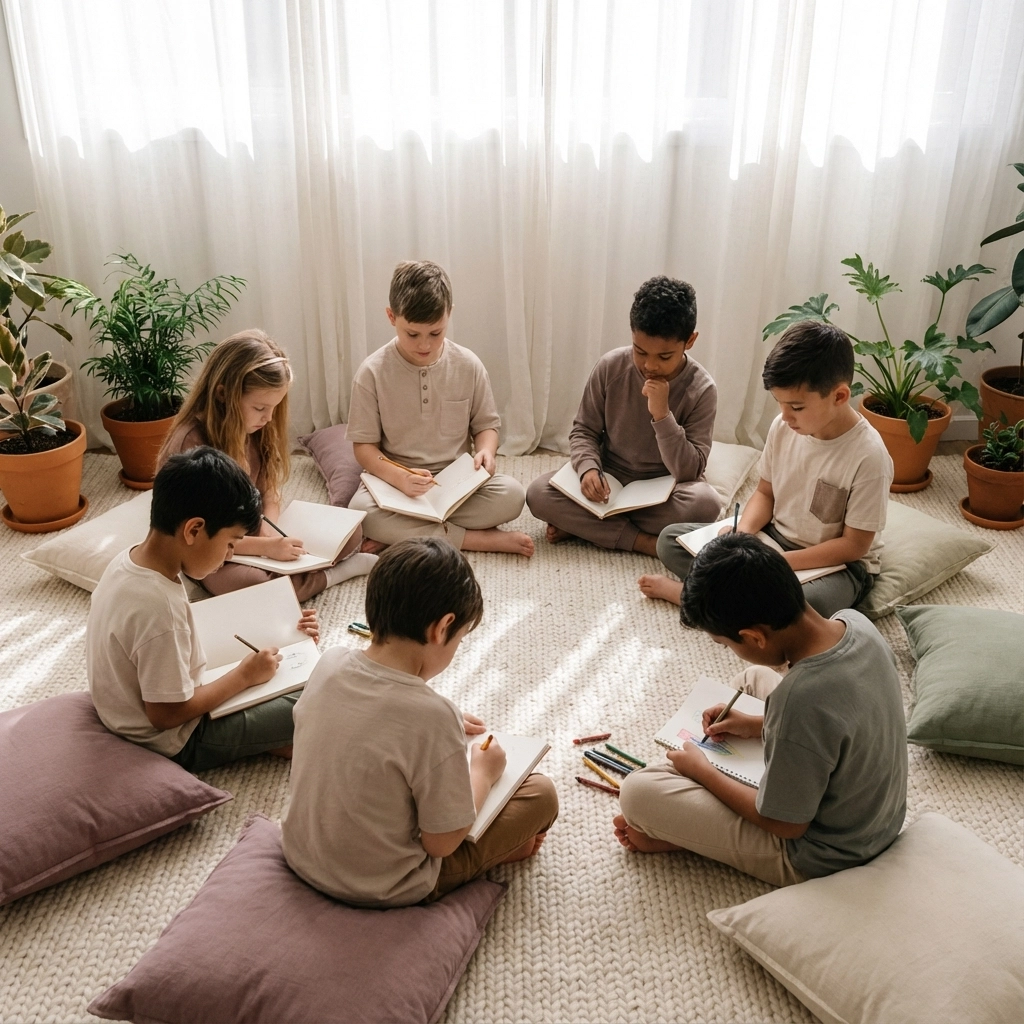
Effective gratitude activities include:
- Daily gratitude drawings with accompanying explanations
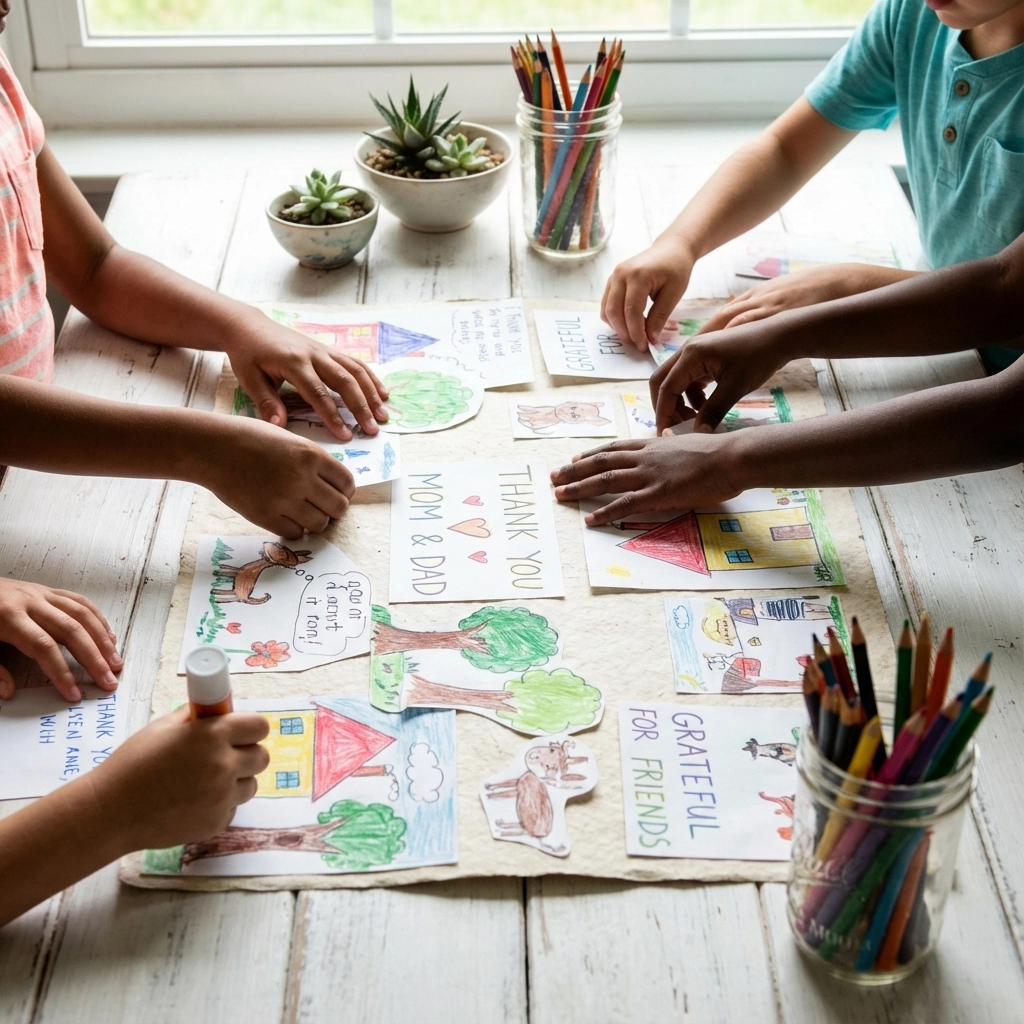
- Thank-you notes to family members, teachers, or friends
- "Good things jar" where children write positive moments on slips of paper
- Seasonal gratitude trees where children add leaves describing what they appreciate
- Family gratitude journals where everyone contributes
Additionally, dream and aspiration activities help children develop a sense of purpose and hope. In turn, when your child draws their future career, writes about places they want to visit, or creates vision boards of their goals, they're building motivation and self-efficacy.
Encourage your child to think beyond material wishes to deeper aspirations like "I want to help animals" or "I want to make people laugh." In turn, these activities help children connect with their values and develop intrinsic motivation that supports long-term emotional wellness.
Overcoming Common Challenges
You might encounter resistance when first introducing drawing and writing activities, especially if your child feels self-conscious about their abilities or claims they "can't draw" or "don't like writing." However, these concerns are normal and manageable with the right approach.
Start Small and Keep It Fun
If your child resists creative activities, start small and focus on fun rather than skill-building. Alternatively, try collaborative projects where you draw or write together, removing the pressure of solo performance. For example, you might begin with simple games like "finish the drawing" where you start a picture and they complete it, or "story starters" where you provide the first sentence and they continue.
Strategies for Reluctant Creators
- Model the behavior by doing your own drawing or writing
- Focus on the story behind the creation rather than artistic technique
- Offer choices in materials, topics, and timing
- Display their work prominently to show you value their efforts
- Connect activities to their interests (drawing favorite characters, writing about hobbies)
Let Go of Perfection
Some children worry about making mistakes or creating "perfect" art. Instead, remind them that creativity is about expression, not perfection. For example, share examples of famous artists who embraced "imperfections" or writers who made mistakes. Ultimately, show them that crossing out words, erasing lines, and trying again are all part of the creative process.
Celebrate Progress
Over time, remember that building emotional awareness and positivity through creative expression is a gradual process. Some days your child might create elaborate masterpieces, while other days they might only manage a simple doodle. Both contributions are valuable and worthy of celebration.
Strengthen Connection at Home
Ultimately, the goal isn't to raise the next Picasso or Shakespeare, but to give your child tools for processing emotions, building self-awareness, and developing a positive relationship with their inner world. When you encourage kids to draw or write about their experiences, you're investing in their emotional intelligence and long-term mental wellness.
As a result, these simple activities create profound opportunities for connection between you and your child. When you ask genuine questions about their creations and listen without judgment to their explanations, you're showing them that their thoughts and feelings matter. This validation builds the foundation for healthy emotional development and strong family relationships.
Ready to explore more ways to support your child's emotional development and family wellness? Visit our blog at https://thrivewellnessclinic.net/blog/ for additional resources on child development, parenting strategies, and mental health support for the whole family.
Social Media Caption:
✨ Simple creative activities can transform your child's emotional awareness! Encouraging kids to draw or write about their day, dreams, and gratitude builds positivity and emotional intelligence. No artistic skills required – just love and encouragement! 🎨📝 #ParentingTips #ChildDevelopment #EmotionalAwareness #FamilyWellness #MentalHealth